 Aktualita
Vyhláška požadující úpravu školního řádu
Vyhláška č. 121/2026 Sb. vyžaduje upravit školní řády od 1.9.2026

NEWS AND ANNOUNCEMENTS
The next special issue of JOP aims to offer an overview of methods to address trajectories of protections and risks in the life course, raising questions of intervention rationales, development, and evaluation. Submissions close on: 30th April 2026. More information
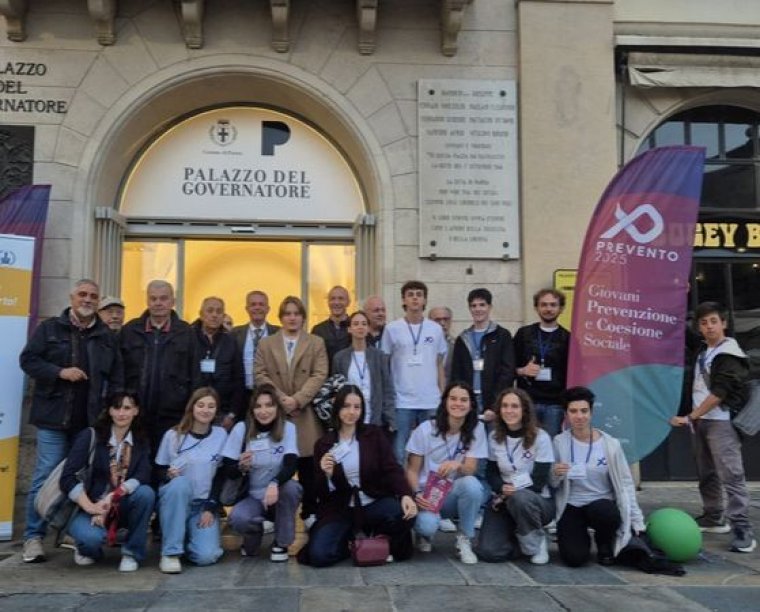
Last October, Parma hosted "Prevento 2025," a festival dedicated entirely to young people, prevention, and social cohesion. Alongside talks on evidence-based programs, healthy digital habits, and supportive parenting, the festival opened prevention to the wider community through activities like creative workshops for families and children that focused on exploring emotions and developing relational skills, as well as workshops based on evidence-based programs.
Students helped shape the day’s activities, including a public debate and a community dinner, showing how prevention can be both participatory and embedded in everyday life. With the first edition now complete, preparations are underway to make Prevento a yearly national event. The festival offers a clear example of how young people can play an active role in prevention.
Read more about the festival here.
“A Space to Speak, A Space to Become”: Reflections on Presenting the PIA Youth Study at EUSPR 2025
by Layan Amouri
Layan Amouri reflects on presenting qualitative findings from the PIA Youth Program in Sweden and shares what newly arrived adolescents told us about what really matters in spaces designed to support them. Rather than focusing only on outcomes, the piece reminds us that prevention is also about relationships, trust, and the everyday experiences that shape confidence and belonging.
Crossing Thresholds: My Experience as a First-Time EUSPR Attendee
by Hasnaa Amouri
In this post, Hasnaa reflects on her experience attending the EUSPR 2025 Conference in Berlin, offering a thoughtful account of growing as an early-career prevention scientist. Her blog highlights the importance of community, cross-country collaboration, culturally responsive prevention, and the often unseen, human side of research with immigrant youth and families.
Can Our Genes Really Predict Our Disease Risk?
by Naouras Bouajila
Naouras Bouajila shares insights from the AlcoolConsoScience project, which examined how Mendelian Randomization—a method using genetic variation to study causal effects—can clarify alcohol’s impact on health. Read the blog post to find out more about the causal role of alcohol consumption in major diseases, and about how genetic evidence can strengthen prevention.
Mastering the Methods: What I Learned from the Early Career Scientific Writing Workshop
by Aisha Siddiqua
Aisha Saddiqua reflects on her experience at the Early Career Scientific Writing Workshop at the 16th EUSPR conference in Berlin, which focused on mastering the Methods section of scientific papers. From applying CONSORT guidelines to her own study to understanding the importance of precision in language when describing methodological procedures, Aisha shares her takeaways from the workshop.
MAY 26-29. SPR 34th Annual Meeting
Washington, DC, USA
The theme for this year's SPR conference is New Horizons in Prevention Science: Multilevel Interventions for Systemic Challenges. Early-bird registration deadline: May 4, 2026. More information
JUN 22 - JUL 3. European Drugs Summer School 2026
Lisbon, Portugal
Held in Lisbon, this face-to-face two-week course places special focus on 'A whole-of-society approach to drugs', examining how communities, professionals, policymakers and people who use substances and their families can move from awareness to effective action. Early bird regustration open until 31.03.2026. More information
Want to boost your CV? Share your work on the EUSPR Scientific Blog!
We’re looking for contributions for our upcoming blog posts — this is a great opportunity to showcase your work, communicate your findings, and share them with the EUSPR community. Publishing on our blog not only helps disseminate your research but also adds real value to your CV.
If you’re interested in writing for the blog, contact Arsha at harshdeepsimran17@gmail.com
Want to share your latest activities?
Make the most of the EUSPR network by sharing your news — publications, conference presentations, training activities, or other initiatives — as well as any opportunities that might interest our community. Your information will be shared through our communication channels (social media, newsletter, and more).
To submit your content, please fill in the form here.
Recent articles chosen by our Early Careers members as worth sharing
• School Suspension as a Predictor of Young Adult Homelessness: The International Youth Development Study
School suspension in adolescence has been shown to predict homelessness in young adulthood. Using longitudinal data from the International Youth Development Study conducted in the US and Australia, this study tested prospective associations between adolescent problem behaviors, student-perceived likelihood of suspension/expulsion, school-level behavior management policy, and young adult homelessness.
• Skill vs. Disposition: Examining Paths of Intervention Effects in an Alcohol and Drug Use Prevention Trial Targeting U.S. Adolescents
This article found that school-based prevention programs are most effective when they strengthen adolescents’ attitudes, beliefs, and commitments to avoid substance use. Tracking over 600 U.S. middle-school students, researchers showed that these “dispositional” factors, not skills training, were the key pathway reducing the onset of alcohol, tobacco, and cannabis use. The study suggests that prevention efforts should prioritize reinforcing youths’ values and long-term goals to protect them over time.
• Drug Use Prevention in Low-income Neighborhoods of Montevideo-Uruguay: the Effectiveness of Mantente REAL in Public Elementary Schools
A new evaluation of Mantente REAL among sixth-graders in low-income public schools in Montevideo, Uruguay, found that the program led to lower cigarette, marijuana, and hard-drug use, as well as stronger anti-drug norms and fewer peer drug offers compared to control schools. Implemented by regular teachers after a short training, the program proved to be a promising, culturally adapted prevention strategy for early adolescents in vulnerable urban communities.
• Motivational Climate and Well-Being in Older Adult Group Exercise: The Mediating Role of Basic Psychological Needs
A new study among adults aged 65+ shows that group exercise classes feel more motivating, and lead to greater well-being and stronger commitment to keep exercising, when instructors cultivate a caring, task-involving climate, where participants feel supported, welcomed, and encouraged to focus on personal improvement. This positive climate enhanced older adults’ basic psychological needs (autonomy, competence, and relatedness), which in turn predicted higher wellbeing and exercise commitment. Conversely, ego-focused, competitive climates were linked to poorer outcomes.